

Electric vehicle ownership in the Tulsa area has been growing steadily, and homeowners making that transition quickly discover that the home charging experience is one of the most consequential practical decisions that comes with owning an EV. The difference between a professionally installed Level 2 charging station and a standard 120-volt outlet is not a minor convenience gap. It is the difference between waking up every morning to a fully charged vehicle and managing a charging schedule that consistently falls short of the household’s actual driving needs.
For Tulsa homeowners navigating the city’s distances daily — from midtown and the Pearl District to south Tulsa along Memorial Drive, out through the Creek Turnpike corridor, and across the highway networks connecting the metro area — reliable overnight charging is what makes EV ownership genuinely stress-free rather than a daily range management exercise.
For homeowners ready to make the investment, electricians in Tulsa, OK, with residential EV charger installation experience are the right resource for evaluating the home’s electrical infrastructure and completing a safe, code-compliant installation.
Here are five compelling reasons to invest in EV charger installation for your Tulsa home.
1. Dramatically Faster Charging Than a Standard Outlet
The most immediate reason to invest in a dedicated Level 2 charger is the difference in charging speed compared to Level 1 charging from a standard 120-volt outlet. Level 1 delivers approximately three to five miles of range per hour. For an EV driven 50 miles in a day, restoring that range requires 10 to 17 hours of charging time — a margin that leaves little room for higher-than-normal driving days.
A Level 2 charger operating on a dedicated 240-volt circuit delivers 15 to 30 miles of range per hour. That same 50-mile deficit is restored in two to three hours. For most Tulsa households, the vehicle is fully charged well before morning regardless of when charging begins.
In our service calls throughout Tulsa, our electricians regularly hear from EV owners who managed with Level 1 charging initially before concluding the limitation was affecting how freely they used the vehicle. A Level 2 installation eliminates that constraint entirely.
2. Lower Electricity Costs Through Smart Charging Schedules
A Level 2 charger with smart charging capability allows Tulsa homeowners to take direct advantage of time-of-use electricity rates — a billing structure where electricity costs less during off-peak hours, typically late night through early morning, than during peak afternoon and evening periods.
Smart Level 2 chargers allow charging to be scheduled automatically at the start of the off-peak window, ensuring the vehicle charges at the lowest available rate without requiring manual management each night. Over the course of a year, the savings from consistent off-peak charging accumulate meaningfully.
Working in homes across Tulsa, our electricians find that homeowners who pair Level 2 installation with a time-of-use rate plan evaluation consistently achieve lower effective charging costs than those who charge on a standard rate without schedule optimization. Smart chargers also provide energy consumption monitoring that separates EV charging costs from the household’s general electricity use — making the cost comparison between electric driving and gasoline straightforward and concrete.
3. Protection for Long-Term Battery Health
Battery health is a long-term EV ownership concern that is less visible than charging speed but equally consequential for total cost of ownership. The battery pack is the most expensive single component in an electric vehicle, and how it charges has a measurable effect on its degradation rate over time.
Frequent reliance on public DC fast charging — convenient for travel but associated with faster battery degradation due to the heat generated at high charge rates — is reduced when a reliable Level 2 home charger is available for daily use. Most EV manufacturers recommend Level 2 as the primary daily charging method, with DC fast charging reserved for travel situations where it is necessary.
Based on what we see in Tulsa properties, homeowners without home charging infrastructure tend to use public DC fast charging more frequently as a substitute — a pattern that prioritizes convenience over battery longevity. A home Level 2 installation changes that dynamic, providing a gentler daily charge that preserves capacity over years of ownership. Smart charger features like charge level limiting — stopping at 80 to 90 percent for everyday use — support battery health further.
4. Increased Home Value and Future-Readiness
A professionally installed Level 2 EV charger is an increasingly recognized home feature that contributes to property value and marketability. As EV adoption continues to grow in the Tulsa metro area, buyer expectation of home charging infrastructure is growing alongside it.
Beyond resale value, EV charger installation represents future-readiness. A Tulsa home with a dedicated 240-volt circuit already installed is positioned to accommodate an EV transition whenever the household is ready — without the additional cost and scheduling delay of adding that infrastructure at the time of purchase. Households with multiple vehicles that may transition to electric over time can have the initial installation designed to support a second circuit for a future additional vehicle.
The electrical panel evaluation that precedes professional EV charger installation also provides a useful picture of the home’s overall electrical capacity — sometimes identifying panel limitations or aging infrastructure worth addressing while electrical work is already planned and scheduled.
5. Safety, Code Compliance, and Professional Reliability
The foundational reason to invest in professional EV charger installation is safety. A charger connected to an inadequate circuit, installed without proper weatherproofing, or operating without required GFCI protection represents a genuine and ongoing electrical hazard.
Level 2 chargers draw significant sustained current — typically 24 to 40 amps continuously over several hours. A circuit that is marginally adequate for this demand generates heat at connection points that can ignite surrounding materials over time. The sustained nature of EV charging means that any inadequacy in the circuit is exposed to that stress every single charging cycle.
Professional installation begins with a load calculation and panel evaluation confirming the home’s electrical system can support the additional circuit. Permits and inspections are required for EV charger installation in Tulsa, OK, and a licensed electrician obtains those permits as part of the service. The inspection process provides independent verification that the installation meets current code requirements — a protection that matters for insurance coverage and any future real estate transaction.
Pairing EV charger installation with evaluation of other electrical repair needs identified during the panel assessment consolidates work efficiently and ensures any deficiencies are addressed in a single visit.
Powering Tulsa’s Electric Future at Home
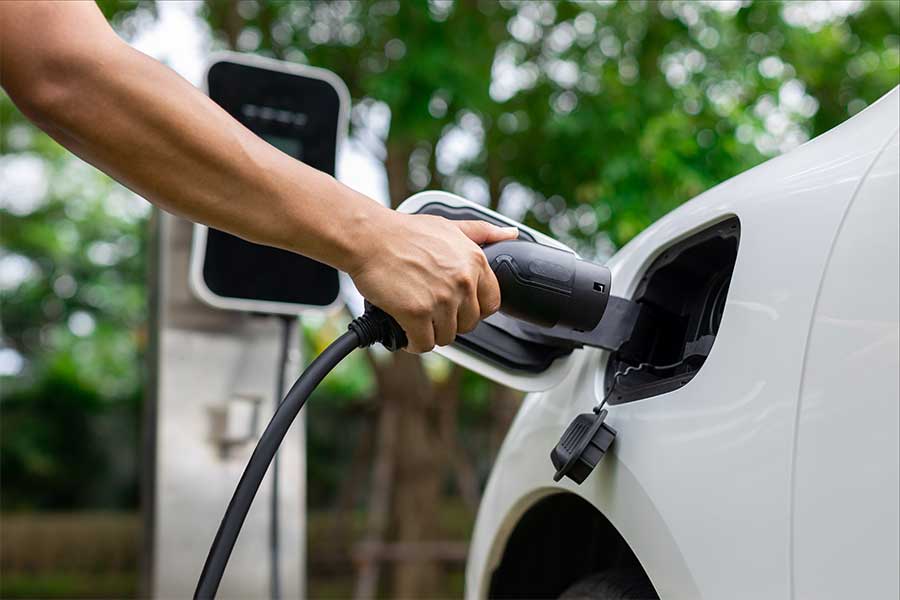
The case for EV charger installation does not require having already purchased an electric vehicle. For homeowners considering an EV in the near term, installing the charging infrastructure first eliminates the Level 1 gap period that otherwise follows the purchase. For households already managing with a standard outlet or relying on public charging, the improvement in daily convenience from a Level 2 installation is immediately and consistently apparent.
Either way, a professional installation completed by a licensed Tulsa electrician — with proper permitting, correct circuit sizing, and code-compliant weatherproofing — is the foundation that makes the investment perform as it should for years of EV ownership ahead. Contact our team today to schedule a consultation with one of our experienced Tulsa electricians.