

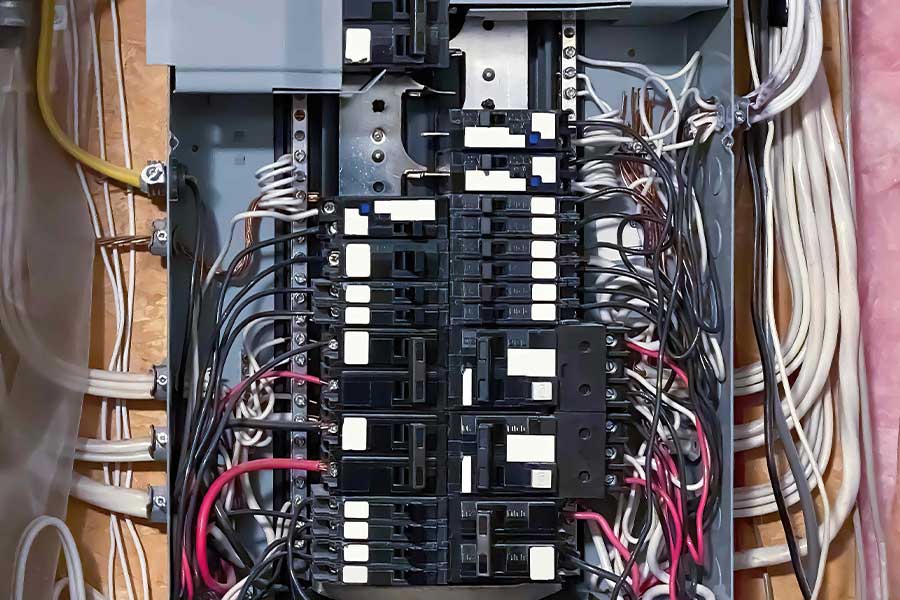
The electrical panel is the central nervous system of a home’s power infrastructure. Every circuit in the house originates there, every breaker that protects those circuits lives there, and the total capacity of the service entrance determines the ceiling on what the home’s electrical system can support. For most Tulsa homeowners, the panel operates entirely in the background — hidden in a utility closet, garage wall, or basement — drawing no attention until something goes wrong.
That invisibility is precisely what makes panel-related problems easy to defer. Unlike a leaking pipe or a failed air conditioner, an aging or undersized panel does not always announce itself dramatically. It communicates through subtler signals — circuits that trip more than they should, lights that dim when appliances run, no open slots when new circuits are needed. These signals are easy to rationalize until the panel’s condition creates a safety hazard or genuine constraint on how the home is used.
For Tulsa homeowners who suspect their panel may be approaching the end of its useful service life, electricians in Tulsa, OK, with residential panel experience are the right starting point for a professional assessment.
Here are five signs that an electrical panel upgrade may be needed in your Tulsa home.
1. The Panel Is 25 to 40 Years Old or Older
Age is one of the most relevant factors in evaluating whether a panel is approaching the end of its reliable service life. Most residential electrical panels are designed for a service life of 25 to 40 years. Panels that have reached or exceeded that range may still be functioning in the sense that the lights are on — but their internal components have been subjected to decades of thermal cycling, vibration, and load stress that degrades performance in ways not visible from the exterior.
The internal components most affected by age are the breaker mechanisms themselves. Over decades of use, springs fatigue, contacts oxidize, and trip thresholds drift from factory specifications. A breaker 30 years old that has never tripped may have a threshold that has drifted significantly — allowing more current through the circuit than it should before interrupting. That drift is a fire risk impossible to detect without testing.
Working in homes across Tulsa — from the craftsman bungalows near Brookside to ranch-style homes in east Tulsa neighborhoods — our electricians regularly encounter panels original to homes built in the 1960s, 1970s, and 1980s where the physical enclosure appears intact but the internal condition tells a different story.
2. The Home Has Specific Problem Panel Brands
Certain panel brands installed in Tulsa, OK, homes during the mid-to-late twentieth century have well-documented reliability and safety concerns that make them candidates for replacement regardless of apparent current function.
Federal Pacific Electric Stab-Lok panels, widely installed from the 1950s through the 1980s, have a documented failure-to-trip rate significantly higher than other panel brands — meaning breakers may not interrupt the circuit during an overcurrent condition, allowing wiring to overheat without protection. These panels are identifiable by their distinctive red Stab-Lok breakers and the Federal Pacific Electric label on the enclosure.
Zinsco panels — also sold under the GTE-Sylvania brand name — were installed through the 1970s and have a related failure profile. Zinsco breakers are known to bond to the bus bar over time, making it physically impossible to trip or reset them. A breaker that cannot be tripped does not protect the circuit it serves.
Based on what we see in Tulsa, OK, properties from these construction eras, these panel brands appear with enough regularity to warrant specific mention. A professional inspection confirms whether replacement is the appropriate recommendation.
3. Frequent Breaker Trips and Persistent Capacity Constraints
A breaker tripping occasionally under clearly identifiable high-demand conditions is functioning as intended. A breaker tripping repeatedly under normal household use — or needing to be reset more than once without a clear explanation — indicates that something in the relationship between circuit load and capacity is not right.
Frequent tripping has two primary causes: genuine circuit overloading, and breaker degradation causing nuisance tripping below the rated capacity. Genuine overloading in a home where electrical demand has grown over time indicates the panel’s circuit configuration no longer matches household needs. When the panel is full — no open slots, or slots occupied by tandem breakers squeezed in to accommodate demand — adding circuits is not possible without a panel upgrade.
The combination of electrical panel upgrade and circuit addition is one of the most common projects our electricians complete in Tulsa, OK, homes where electrical demand has outpaced the original infrastructure.
4. Visible Warning Signs and Physical Evidence of Deterioration
The panel communicates its condition through physical evidence accessible to any homeowner who opens the panel door. Several specific observations warrant prompt professional attention.
Scorch marks, discoloration, or burn marks around breaker positions or on the panel interior indicate heat generated at a level affecting surrounding materials — consistent with arcing, loose connections, or sustained overcurrent conditions. Any visible scorching warrants immediate professional attention rather than a monitoring approach.
A burning smell or odor of hot plastic near the panel — even if faint or intermittent — indicates electrical components overheating within the enclosure and should prompt an immediate call to a licensed electrician. Visible rust, corrosion, or moisture intrusion inside the panel creates electrocution risk and accelerates corrosion of bus connections and breaker contacts.
Wiring that appears melted, discolored, or charred at any visible point within the panel warrants treating the situation as an emergency — evidence of past overheating indicates the panel has operated in unsafe conditions that may have caused damage to wiring beyond the panel.
5. The Home Is Being Updated With High-Demand Modern Systems
Among the most common drivers of panel upgrade conversations in Tulsa, OK, homes is the addition of high-demand systems requiring dedicated circuits and service capacity that older panels cannot provide.
A Level 2 EV charger requires a dedicated 240-volt, 32 to 50-amp circuit. Adding this to an older 100-amp panel already serving the home’s full electrical load may not be feasible without a service upgrade. Beginning an EV charger installation with a panel assessment ensures electrical infrastructure is adequate before equipment is purchased — preventing an incompatible panel requirement discovered mid-project.
Whole-house generator installation requires a transfer switch at the panel level and a dedicated generator circuit. Large kitchen renovations with commercial-grade appliances, home additions adding significant finished square footage, and generator installations all represent project types where panel capacity is a fundamental prerequisite — one worth evaluating and addressing before the project proceeds rather than discovering as a constraint mid-installation.
For Tulsa homeowners planning any of these improvements, engaging a licensed electrician at the planning stage allows electrical infrastructure requirements to be factored into the project budget and timeline from the beginning.
Keeping Tulsa Homes Powered Safely and Reliably
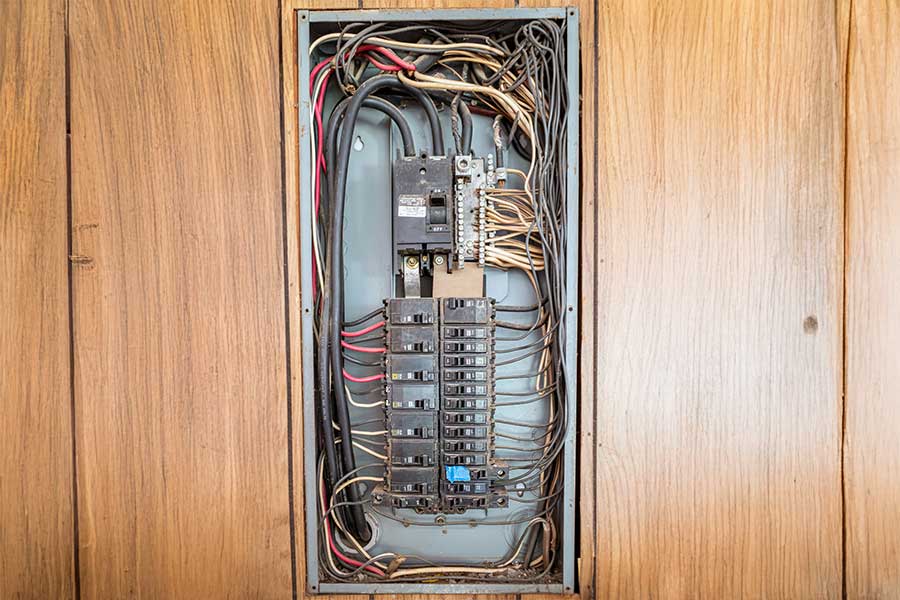
For homes with aging panels, documented problem brands, or physical evidence of deterioration, a panel upgrade is a safety intervention — replacing infrastructure that represents a genuine fire and safety risk with a modern panel that meets current code requirements. The electrical rewiring that sometimes accompanies a panel upgrade extends those safety improvements from the distribution point through circuit wiring to outlets and fixtures throughout the home.
For Tulsa homeowners whose panels are aging, who recognize any of the five signs described above, or who are planning home improvements that will increase electrical demand, a professional panel assessment is the right starting point. If your home is showing any of these signs, contact our team today and schedule an electrical assessment with one of our experienced Tulsa electricians.