

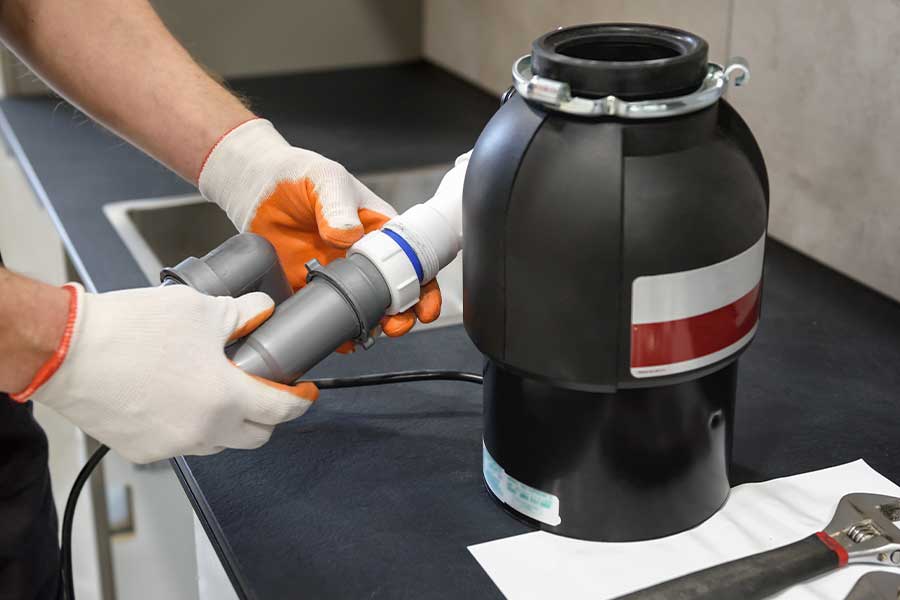
Replacing a garbage disposal seems straightforward on the surface. The old unit stops working, a replacement is selected, and the swap is made. In practice, however, garbage disposal replacement involves a range of considerations that are easy to overlook — and that, when overlooked, lead to mismatched equipment, improper installation, and outcomes that fall short of expectations.
Bixby’s residential landscape spans a wide range of housing types and ages — from established homes near downtown to newer construction along E 121st St and the broader south Tulsa corridor — and the plumbing configurations, cabinet layouts, and electrical situations that affect disposal installation vary accordingly.
For homeowners ready to move forward, plumbers in Bixby, OK, with residential fixture experience are the right resource for both guidance and installation.
Here are seven things every Bixby homeowner should know before garbage disposal replacement.
1. Assess Whether Repair or Replacement Is the Right Call
Before committing to full replacement, it is worth understanding whether the unit actually needs one. Garbage disposals have an average service life of 8 to 15 years. A unit within that range experiencing an isolated issue — a tripped reset button, a jammed grinding plate, or a worn splash guard — may be a repair candidate rather than a replacement.
However, a disposal leaking from the body of the unit has typically reached internal seal failure, which is not economically repairable. A unit more than 10 years old with recurring problems is usually better served by replacement. Working in homes across Bixby, our plumbers assess condition and age before recommending a course of action — an honest evaluation is the starting point for a decision that serves the homeowner’s long-term interests.
2. Motor Size Matters More Than Most Homeowners Realize
Selecting an appropriately sized motor for the household’s usage patterns is one of the most important decisions in the replacement process. Entry-level units at 1/3 to 1/2 horsepower are adequate for light use but more prone to jamming and shorter-lived under heavier demand. Mid-range units at 3/4 horsepower represent the most practical choice for the majority of Bixby households — they handle a broader range of food waste with less risk of jamming at a modest incremental cost over entry-level options.
Higher-capacity units at 1 horsepower or above are appropriate for larger families or households that cook frequently. They run more quietly, handle tough materials more effectively, and typically carry longer warranties.
Based on what we see in Bixby properties, the most common replacement mistake is selecting a unit based primarily on price rather than motor size and usage fit. An undersized motor in a high-use kitchen jams frequently, fails sooner, and ultimately costs more than the upfront savings justified.
3. Mounting Compatibility Is Not Automatic
Garbage disposals mount to the sink drain opening using one of several mounting systems. The dominant residential standard is the three-bolt system used by InSinkErator, found in the majority of homes. Other brands use different configurations. When switching between brands with different mounting systems, the sink flange and mounting assembly must be replaced — involving removal of the old hardware and reinstallation with appropriate plumber’s putty and sealing.
In our service calls throughout Bixby, assuming compatibility without verification results in additional trips, additional parts, and additional time. A professional plumber evaluates the existing mounting configuration and drain opening before the replacement unit is committed to — particularly important in older Bixby homes where previous owners may have installed non-standard components.
4. Electrical Requirements Vary Between Units and Homes
Most residential garbage disposals operate on a standard 120-volt, 15-amp circuit, but higher-capacity units may require a 20-amp circuit. The existing wiring beneath the sink may or may not match the replacement unit’s requirements, and proceeding without confirming compatibility creates safety concerns and potential code violations.
Disposals are powered either by hardwired connection or cord-and-plug to an outlet beneath the sink. The replacement unit needs to match the existing configuration, or the electrical setup requires modification by a licensed electrician. Homeowners uncertain about their sink’s electrical configuration are best served by professional evaluation before purchasing a replacement unit — discovering an incompatibility after purchase creates unnecessary complications.
5. Drain Configuration and Dishwasher Connection Require Attention
The drain connection from the disposal to the household drain system requires careful attention, particularly when the new unit’s drain outlet sits at a different height than the old one. Proper slope throughout the trap arm and P-trap must be maintained, and adjustment may be needed if the new unit’s geometry differs from its predecessor.
Dishwasher drain connection is a detail that is easy to miss. Disposals installed in kitchens with dishwashers include a knock-out plug in the dishwasher inlet port that must be removed before the drain hose is connected. Failure to remove it blocks the dishwasher drain and causes standing water to accumulate — a problem not always immediately traced back to the disposal installation. In kitchens without a dishwasher, the knock-out must remain in place to prevent sewer gas and water from entering the cabinet space.
Professional garbage disposal installation addresses both details as a standard part of the service.
6. Not Everything Should Go Into a Garbage Disposal
Understanding what the unit is not designed to handle is as important as selecting the right model. Misuse is among the leading causes of premature disposal failure and drain line problems.
Materials that should never be processed include grease, fats, and cooking oils — liquid when hot but solidifying in the drain line and creating blockages over time. Fibrous vegetables like celery and corn husks wrap around grinding components and cause jams. Starchy foods including pasta, rice, and potato peels expand when wet and form a paste that clogs the drain. Eggshells are a commonly repeated myth as a disposal cleaner — the membrane wraps around grinding components and the fine particles contribute to buildup. Large bones, hard fruit pits, and non-food items of any kind should never enter the disposal.
Pairing proper use habits with periodic drain cleaning keeps the drain system downstream of the disposal clear and functioning correctly.
7. Professional Installation Protects the Investment and the Home
The disposal connects to both the plumbing system and the electrical system, and improper work on either connection creates risks ranging from slow leaks causing hidden water damage to electrical safety hazards. A slow drip from the drain connection or P-trap, enclosed in a cabinet beneath the sink, can go undetected for an extended period — saturating cabinet materials, subfloor, and adjacent wall framing before damage becomes visible.
The mounting assembly must be correctly seated to create a watertight seal between the disposal and the sink drain. Insufficient plumber’s putty or improperly tightened mounting hardware creates leak pathways that develop under normal use. Electrical connections must be secure and appropriately sized — a loose hardwired connection creates a fire risk, and an undersized circuit for a high-capacity unit creates wiring damage over time.
Our plumbers complete disposal installations with attention to every connection point — confirming watertight seals, verifying electrical compatibility, testing drain flow, and checking dishwasher connection function before the job is considered complete.

Making the Right Choice for Your Bixby Kitchen
Garbage disposal replacement produces a reliable, lasting result when the relevant variables are understood and addressed in the right order. Confirming whether repair is appropriate, selecting the right motor size, verifying mounting and electrical compatibility, and ensuring proper drain configuration are the foundations of a replacement that performs as expected for years.A well-chosen, properly installed disposal used correctly will serve a Bixby kitchen reliably for a decade or more. Contact our team today to schedule a garbage disposal assessment or installation with one of our experienced Bixby plumbers.